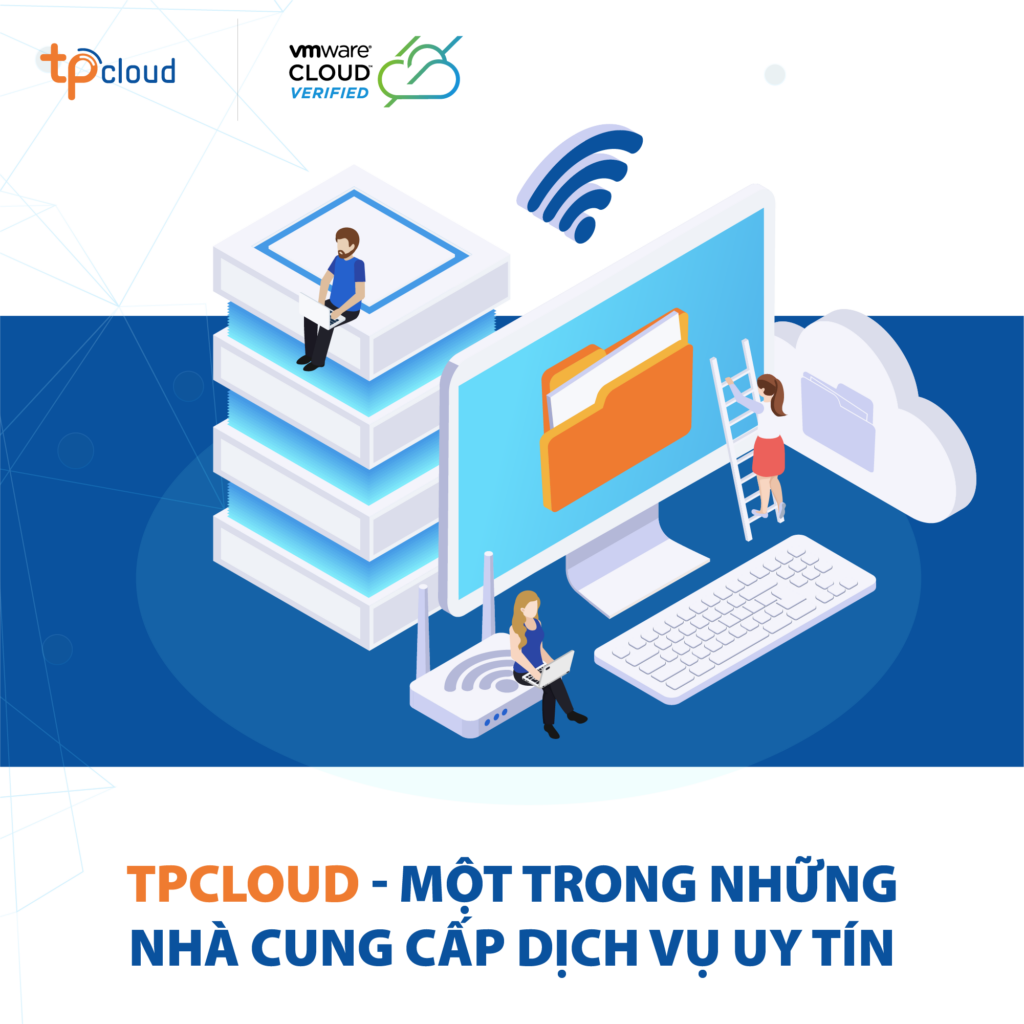



The key advantage of cloud computing is its ability to simplify IT systems, making it easier for businesses to operate. Cloud computing helps businesses reduce their data burden by freeing up a large amount of data storage space, allowing companies to focus their resources on other areas.
Solving the “pain point”:
Storing all your data on-premises can cause capacity issues and potentially threaten your data security. The more data a business has, the more on-premises storage space it needs. Furthermore, if any unforeseen events occur, there is a high probability that the company will lose all its important data without any backups stored beforehand. This is the “pain point” that cloud computing can solve.
To alleviate this “pain,” the cloud can store everything, allowing the company to focus on more important tasks. The cloud can solve the capacity problem, providing space for data growth as the business expands. And by storing data in the cloud, the business will be completely safe from unforeseen events that cause data loss.
Reduced infrastructure costs
By moving all data to a cloud computing platform, the company will significantly reduce the costs of building and maintaining traditional storage infrastructure. With cloud computing, companies don’t need to invest a large amount in storage; they can completely outsource to a third party (CSP – Cloud Service Provider) at a much lower cost. This not only completely reduces the total cost of ownership (TCO), but also allows businesses to transform capital expenditures (CAPEx) into operational expenses (OpEx)!
Flexible payment structure
In addition to reducing the need for businesses to spend heavily on storage infrastructure, cloud computing also allows for greater flexibility in payment. Storing data in the cloud gives businesses complete control over payments, and the funds invested in cloud computing are always accurate and reflect the value the business desires. For example, a business wants 800 GB of storage space, and the company only needs to spend the exact amount for that 800 GB!
There’s always room for innovation:
By investing in cloud computing, employees no longer need to spend a lot of time managing infrastructure and troubleshooting with traditional data storage methods. Instead, the company can focus on new projects and developing its business.
Thus, it can be seen that digital transformation to cloud computing is a common trend for many businesses, because of the great benefits it brings. In addition to simplifying IT processes, the cloud can also help businesses cut costs, enhance innovation, and drive growth. This trend is something businesses cannot ignore!