


Web Hosting services allow businesses to store website data and publish websites online. This helps businesses ensure website presence, visitor satisfaction, and attract more users to the site. Therefore, it opens up great business opportunities for many businesses.
Let’s explore information about the popular types of Web Hosting available today, and discover some advantages and disadvantages of each type in this article.
-
Server
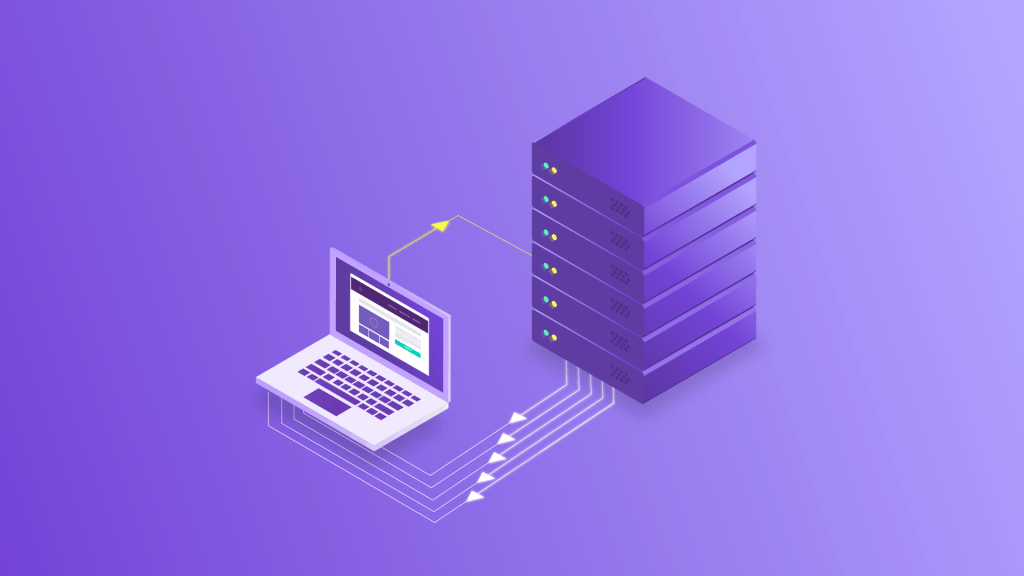
A server is a large physical server with powerful configuration.<br A server is a physical machine with its own operating system that runs like any other computer, but it is larger and has more powerful functionality and configuration. This type of server gives users complete control over the website server. Users can customize everything from web configuration, operating system, software, and their own hosting environment according to their needs.
Disadvantages
Because servers provide maximum control with powerful performance, they require a large investment and high technical knowledge for installation, operation, and upgrades. Another disadvantage is that if the physical server fails, the entire system will stop working. In addition, if the hard drive fails, it will cause data loss and it will be virtually impossible to recover.
-
Virtual Private Server (VPS)

A VPS virtual private server has an operating system, CPU, RAM capacity and Separate hard drive.
A VPS (Virtual Private Server) is a type of virtual server, created by dividing a physical server into multiple virtual servers. Each VPS operates by sharing resources from the original physical server, but has its own operating system, CPU, RAM, and hard drive. Users have deep access to their VPS space and ensure a secure data storage environment. Compared to physical servers, businesses can consider using VPS to save costs while still ensuring security and good data processing speed.
Disadvantages
VPS virtual servers have limited capacity for large resource expansion, and resource upgrades require specialized skills and significant costs. Furthermore, VPS operation depends on the hardware of the physical computer hosting the VPS. Therefore, when a physical server fails, the system will have to stop working, which can lead to data loss. Additionally, the physical server may freeze, causing the VPS to stop working during peak hours.
-
Shared Hosting

Different accounts using Shared Hosting will share the same Resources.
Shared hosting is a form of shared network hosting. With this type of hosting, web hosting customers share the same computer. All websites from all different accounts will share common resources from the server such as RAM and CPU. The company providing this hosting service will only allocate a small amount of resources to users. Therefore, this form of shared hosting is less expensive than other options and does not require too much specialized skill.
Disadvantages
Users do not have deep access to the system. The performance and traffic of a user’s website may be affected by other websites on the same server. Another disadvantage of this hosting is the inability to customize the hosting environment. Finally, shared hosting poses certain security risks for web applications and protecting websites from cyberattacks.
-
Cloud Hosting

Cloud Hosting operates stably on the power system Cloud Hosting.
Cloud hosting is a form of hosting that operates on a cloud computing system. It allows users to place their websites on the cloud and pool resources from multiple physical servers. Cloud hosting provides a stable system with unlimited capacity to handle large traffic volumes.
Furthermore, users can quickly and cost-effectively scale up or down storage as needed. Because businesses only pay when using the service and resources (CPU, RAM, HDD… configured according to requirements).
Disadvantages
With many Cloud Hosting settings, users will be limited and have to pay quite high costs when they want to change system settings and add some supporting software.
This article has compared current Web Hosting types to help businesses choose the appropriate storage model. If you are looking to rent a reputable cloud computing storage service, please refer to TPCloud. Cloud server services based on the VMware platform offer many benefits in business operations or applying IT to production.
If you have any needs, please feel free to contact our hotline: (+84) 96803 6868 or visit http://www.tpcloud.vn/ for free consultation.