


Hybrid cloud computing (hybrid cloud) consists of on-premises infrastructure, private cloud services, and public clouds. In other words, are you using a combination of public clouds, on-premises computing, and private clouds in your data center? You have a hybrid cloud infrastructure.
In this article, let’s explore hybrid cloud computing technology with TPCloud!
What are the benefits of hybrid cloud computing?
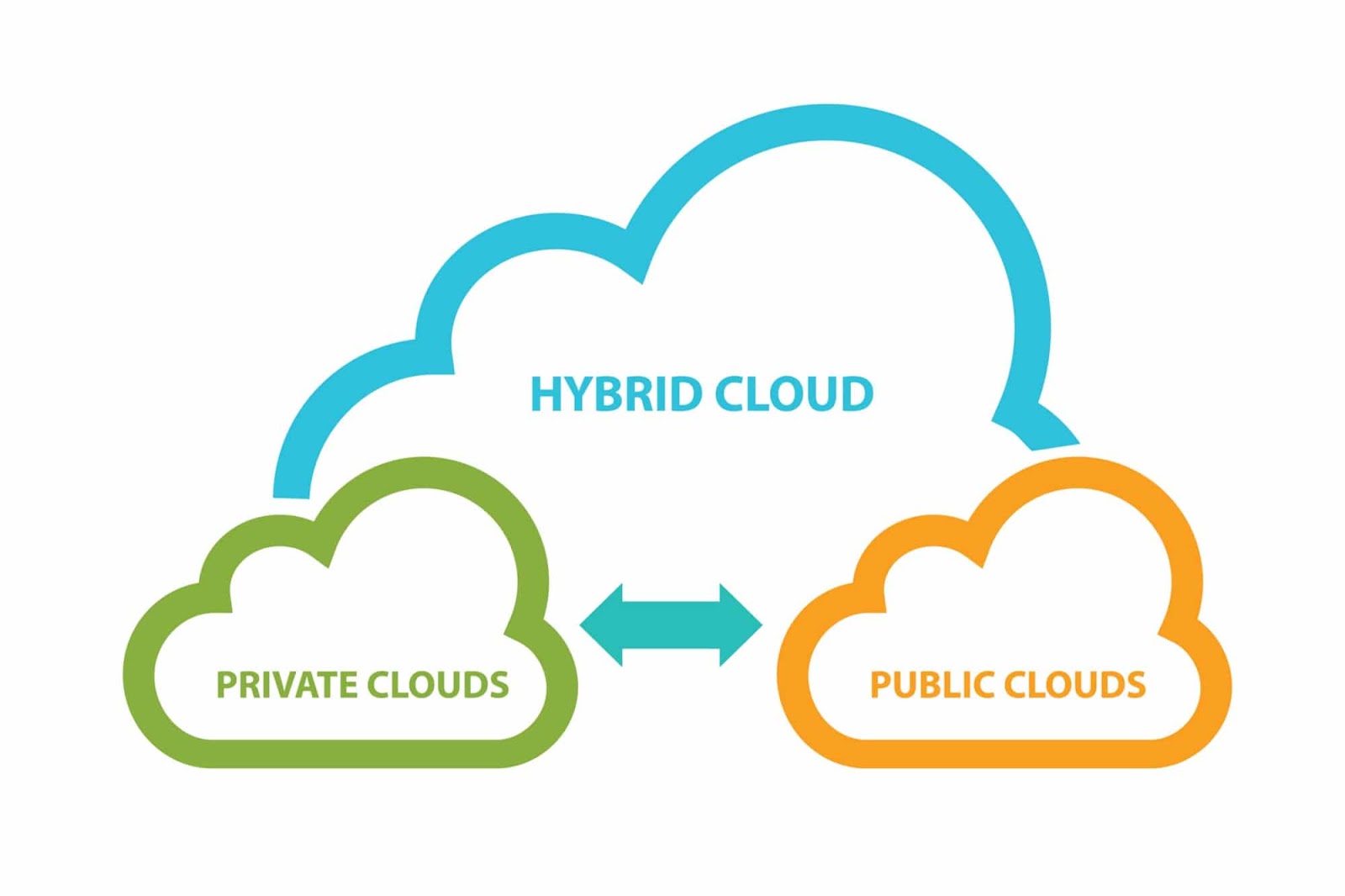
Hybrid cloud computing provides agile and rapidly adaptable systems.
Cloud computing services help businesses drive cost savings. But the main value lies in supporting rapid digital business transformation. The main benefit of a hybrid cloud is agility. The need to adapt and change direction quickly is a core principle of a digital business. Your business may want (or need) to combine public clouds, private clouds, and on-premises resources to achieve the agility needed for a competitive advantage.
Public Cloud: Advantages and Disadvantages
img src=”https://tpcloud.vn/wp-content/uploads/2026/02/9tEB5jXPKRMRt9EK-maecjmel4_rOSq94AGXRpIaRhzvArMBZ0blov6sPrjBjc4KQgv2P4mn1NNjKTWeiXJdz6Dc-dtQH_Rzz8dg8ziej8d0PColZ2PBA6BEAEcN3EwhJI_1l7Ly.jpeg”/>
Public clouds offer Cloud infrastructure as a service (IaaS).
If you contract with a service provider like AWS or Azure, you are using a public cloud and essentially renting a portion of their distributed data center infrastructure. Public clouds offer cloud infrastructure as a service (IaaS). They offer great economic efficiency, scalability, and fully automated operation, making it nearly impossible for an on-premises data center to compete in terms of price or efficiency.
Advantages:
-
Scalability (both up and down). Virtually unlimited due to on-demand cloud resources.
-
Reduced capital expenditure (capex). You don’t need to buy all your own data center equipment.
Reliability. Because services are distributed across multiple data centers.
Disadvantages:
Less control over data security. You never know where — and under geographical or other restrictions — your data is in operation.
Higher operating costs (opex). As you scale your performance, your hourly rates will increase.
Private Cloud: Advantages and Disadvantages
Private cloud provides a private, dedicated infrastructure for businesses business.
If you set up a dedicated cloud infrastructure for your business, you are using a private cloud. It is a private cloud whether you manage it yourself or outsource it to a third party and whether you host it in your data center or off-premises.
Advantages:
-
Protection. Your data and applications remain behind a firewall and are only accessible to your business — making private clouds more suitable for handling or storing sensitive data.
-
TCO can be lower. Through opex lower over time.
-
Greater control and customization. Customize your servers to your business preferences.
Flexibility. The ability to move non-sensitive data to the public cloud to meet sudden demands on your private cloud.
Disadvantages:
Higher costs. Increased initial fees and the need to recoup the cost of the equipment you purchase.
Task. To operate and maintain your own data center, IT hardware, and enterprise software—as well as your own security and compliance.
Less flexibility. Increase or decrease IT resources as your needs change.
Is a hybrid cloud right for you?
Not everything belongs in a public cloud. That’s why so many companies are opting for hybrid cloud computing services. Hybrid clouds offer the benefits of both public and private clouds. Additionally, this model leverages the existing architecture in the data center.
Hybrid clouds are being used frequently in the financial sector. Especially as the gap between investors and exchanges widens. By pushing buy orders to the internal cloud and running analysis on transactions in the public cloud. This will help reduce the physical space required for computing on exchanges.
Hybrid cloud technology is also widely used in the healthcare industry. Because the continuous transfer of data between healthcare providers and insurance companies is a difficult task.
Retail is also an industry that needs to use hybrid cloud technology. Transmitting sales information and analyzing business data is a task that requires significant computing resources, both in the public cloud and the private cloud.This article shares information about hybrid cloud computing and its benefits. If you are looking to rent a reputable cloud computing service, please consider TPCloud. This cloud server service based on the VMware platform offers many benefits in business operations or the application of IT in production.
If you have any needs, please feel free to contact our hotline: (+84) 96803 6868 or visit https://tpcloud.vn/vi directly for free consultation.